Trip Report
Summit 2026 – Blanca Peak and Ellingwood
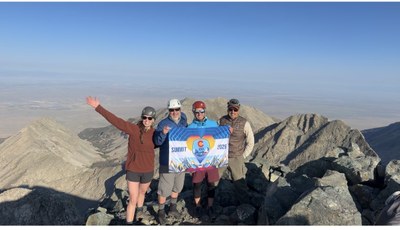
Our team backpacked to Lake Como and successfully summited Blanca Peak and Ellingwood Point on August 1 as part of Summit 2026 and Colorado’s 150th birthday celebration. The challenging trip included Class 3 scrambling on Blanca and an exciting, exposed traverse to Ellingwood Point.
 San Luis Valley Great Outdoors
- Sat, Aug 1, 2026
- Summit 2026 – Blanca Peak and Ellingwood
- Blanca Peak and Ellingwood
- Hiking
- Successful
-

- Road recommended for high clearance only
-
Conditions on August 1 were dry and generally favorable, with no snow remaining on the route. We began from our camp above Lake Como at 5:00 a.m. to take advantage of cooler temperatures and reduce our exposure to afternoon thunderstorms, which were predicted by 1 pm. The trail through the upper basin was easy to follow, but the terrain became increasingly steep, rocky, and loose as we approached the saddle and climbed toward Blanca Peak.
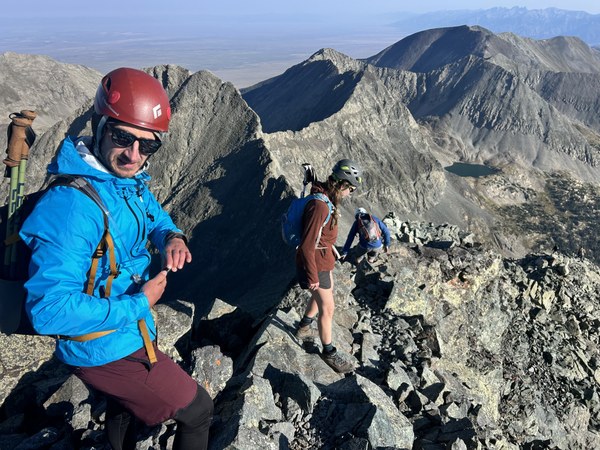
The upper route required careful movement over talus and several sections of hands-on scrambling. Loose rock, route-finding, and exposure were the primary hazards, particularly near Blanca’s summit and particularly along the traverse to Ellingwood Point. The traverse included airy sections beneath the ridge where a slip could have serious consequences, so our team moved deliberately, stayed close together, and avoided dislodging rocks onto one another. Helmets are strongly recommended for this combination.
Lake Como Road was dry but extremely rough, steep, and exposed to the afternoon sun. Most hikers should expect to begin low on the road unless they have a highly modified, short-wheelbase four-wheel-drive vehicle and significant off-road experience. Even capable vehicles can become damaged or stranded above the lower parking areas. For backpackers, the heat, limited shade, loose footing, and long descent make the road a significant part of the overall challenge.
Conditions can change quickly in the Mount Blanca basin. Afternoon thunderstorms, lightning, strong winds, rapid temperature drops, and early- or late-season snow can substantially increase the difficulty of the route. An early start, careful weather monitoring, helmets, layers, and sufficient water are essential. Later in the season, climbers should also watch for ice on shaded portions of the upper route and traverse.
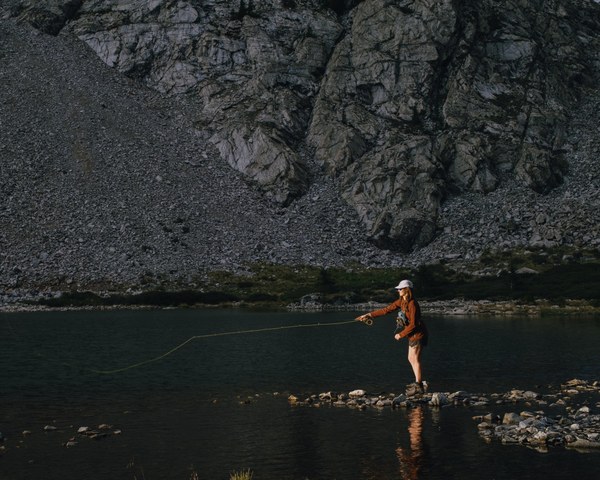
Our team completed an overnight ascent of Blanca Peak and Ellingwood Point as part of Summit 2026, the statewide effort to place a team on every Colorado fourteener on August 1 in celebration of Colorado’s 150th birthday.
We began on July 31 from the lower Lake Como Road parking area. The road was dry but extremely rough, and most vehicles were parked well below Lake Como. Anyone considering driving higher should understand that this is one of the most difficult four-wheel-drive roads in Colorado. Conditions become substantially more technical as the road climbs, and the upper obstacles require a modified, short-wheelbase vehicle, an experienced driver, and often a spotter. Driving higher may save some hiking, but it also creates a real risk of vehicle damage or becoming stranded.
Our team carried overnight packs up Lake Como Road in approximately three to four hours. The road receives the full afternoon sun and offers limited shade, so the approach was hot and exposed. Carrying plenty of water, sun protection, and a lighter layer for the approach was helpful. The hiking itself is not especially technical, but the combination of heat, loose footing, elevation gain, and an overnight pack made it physically demanding.
We established camp above Lake Como, where there are several dispersed campsites. No advance camping permit was required, but visitors should use established sites, properly store food, pack out all waste, and follow Leave No Trace practices. Water is available in the basin, but it must be filtered or treated. We did not have any notable wildlife or rare plant sightings to report.
After setting up camp, we reviewed the route and prepared for a 4:00 a.m. start. We woke early on August 1, ate a quick breakfast, made coffee, and began climbing by headlamp. Our summit team moved steadily through the upper basin as daylight began to break just below 14,000 feet. We turned off our headlamps, added layers against the colder temperatures, and continued toward Blanca’s summit.
The upper route was dry and snow-free. The trail was easy to follow through much of the basin, but the terrain became steeper, rockier, and looser near the saddle and on the final climb. Blanca required careful movement over talus and several hands-on scrambling sections. The views into the Huerfano Valley were outstanding, but the exposure and significant drop on the opposite side of the ridge demanded attention.
After reaching Blanca’s summit and enjoying clear, 360-degree views, we descended to the saddle and began the traverse toward Ellingwood Point. The traverse included Class 3 scrambling, loose rock, route-finding, and exposed sections beneath the ridge. It was exciting, fun, and airy in places. We moved deliberately, maintained spacing to reduce rockfall risk, and stayed together through the more exposed sections. Helmets, strong scrambling skills, comfort with exposure, and careful route-finding are highly recommended.
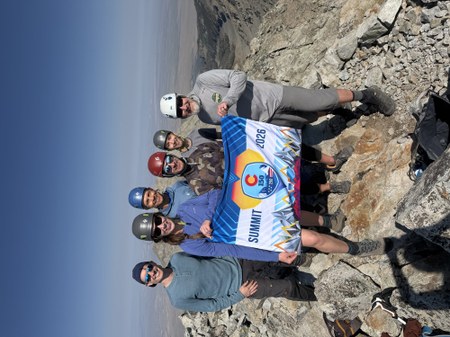
We reached Ellingwood Point and raised the Colorado 150 flag with other climbers on the summit. We then descended from Ellingwood and returned to our high camp at approximately 12:30 p.m., about eight and a half hours after our 4:00 a.m. departure. We packed camp and began the long, hot hike back down Lake Como Road.
The complete Blanca and Ellingwood combination is approximately 18 miles round trip with about 6,800 feet of elevation gain when starting from the lower parking area. Our trip was completed over two days, with the backpack to Lake Como on the first afternoon and both summits, the return to camp, and the hike out on the second day.
Helpful gear included helmets, headlamps with spare batteries, trekking poles, water filters, sun protection, warm layers, rain gear, sturdy footwear, and a reliable map or downloaded route. An early start was essential for avoiding afternoon thunderstorms and giving the team enough time to complete both summits, pack camp, and descend safely.
Although we had favorable conditions, weather in the Mount Blanca basin can change quickly. Afternoon lightning, strong winds, rapid temperature drops, and early- or late-season snow can make the route significantly more difficult. Climbers should check current mountain and road conditions, monitor the forecast, establish turnaround times, and be prepared to change plans if weather or team conditions deteriorate.
This was a challenging and memorable trip through one of the San Luis Valley’s most spectacular alpine landscapes. Standing on Blanca and Ellingwood as teams reached summits across Colorado was an incredible way to celebrate the state’s 150th birthday.