 Graham Ottley
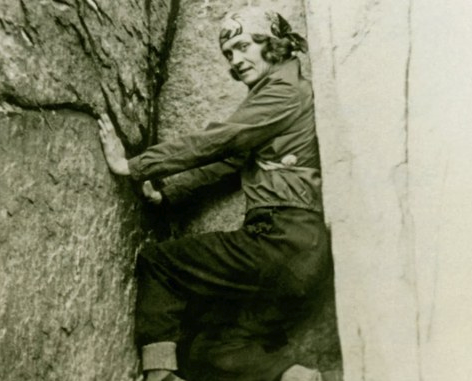
Miriam O'Brien Underhill didn't just climb difficult mountains. She insisted on doing it on lead and in doing so, she changed what the world believed women were capable of in the high country.
Most people assume the hardest part of climbing a mountain is reaching the summit. Miriam O'Brien Underhill believed the harder challenge was convincing the world that women could get there without a man taking the lead.
In the 1920s, mountaineering had an unwritten rule. Women were welcome, provided they followed. They could be clients, companions, or proof that a male guide was exceptionally skilled. If a woman reached the top, the achievement often belonged to the man who had planned the route, made the decisions, and accepted the praise. The mountain wasn't the only thing standing in her way.
Underhill found that arrangement quietly insulting. Rather than arguing in newspapers or demanding permission from the climbing establishment, she did something far more disruptive: she organized expeditions where there were no men to lead at all. The women chose the route. The women navigated dangerous terrain. The women accepted every consequence if something went wrong.
She called it "manless climbing."
The Historical RecordBetween 1929 and 1932, Underhill made nine all-women ascents in the Alps — what she called cordée féminine. These included the first all-women summits of the Aiguille du Peigne (1927), the Grépon (1929), and the Matterhorn (1932). After her Grépon ascent, French mountaineer Étienne Bruhl reportedly declared: "The Grépon has disappeared. Now that it has been done by two women alone, no self-respecting man can undertake it." He meant it as a slight. History has received it differently.
The phrase alone caused raised eyebrows. Critics dismissed it as a publicity stunt or accused her of trying to exclude men altogether. That wasn't her point. Underhill wasn't saying women should never climb with men. She was asking a far more uncomfortable question: if women were never allowed to make the critical decisions, how would anyone ever know what they were truly capable of?
"The one who goes up first on the rope has even more fun, as he solves the immediate problems of technique, tactics and strategy as they occur… I saw no reason why women, ipso facto, should be incapable of leading a good climb. They had, as a matter of fact, already done so, on some few scattered occasions. But why not make it a regular thing, on the usual climbs of the day?"
— Miriam O'Brien Underhill, from her 1934 National Geographic essay, "Manless Alpine Climbing"
What Leading Actually Means
There is a distinction in climbing that non-climbers rarely think about: the difference between summiting and leading. Anyone who reaches the top has climbed the mountain. But the person who leads has done something more — chosen the line, assessed the exposure, set protection, made every small judgment call that keeps the rope team safe. Credit on a mountain, if it lands anywhere, lands with the leader.
Underhill understood this. And she understood that in her era, women were systematically kept from that role — not because they lacked the skill, but because the system assumed they did. The result was a kind of invisible ceiling built into the rope itself: you could reach the summit, but someone else would always hold the decisions above you.
Her response was to remove that structure entirely and see what happened. What happened was nine successful first-women's ascents of difficult Alpine routes, a landmark essay in National Geographic, and a memoir — Give Me the Hills (1956) — that has inspired generations of climbers since. She also became a prolific writer and photographer, edited the Appalachian Mountain Club's journal Appalachia for six years, and later became one of the first people to summit all of New Hampshire's 4,000-foot peaks in winter.
Colorado Had Its Own Trailblazers
While Underhill was making her all-women ascents in the Alps, the Colorado Mountain Club was home to women doing quietly extraordinary things in the American Rockies. Mary Cronin, pictured in CMC archives from the 1920s, became in the 1930s the first woman to summit all of Colorado's fourteeners, during a decade when women were still routinely discouraged from serious outdoor pursuits.
The CMC's own history acknowledges the tension directly: "Since its founding the CMC has had women members who have been world-class mountaineers. However, for much of the 1900s the CMC, like the rest of American society, did not always provide equitable access to people of color and other diverse groups." The peaks were open. Full belonging took longer.
That thread runs directly to today, where CMC leaders like Jennifer Bealer summited Denali in 2024 as a team of two women, unguided, summit to descent in 17 days, and Sheryl Lampert has been among the most prolific technical instructors in CMC's history while actively reshaping the Alpine Climbing School around diversity and inclusion. Underhill's question, "why not make women's leadership a regular thing...?" is still being answered.
What Underhill's Story Means for CMC Leaders and Volunteers
As a CMC trip leader or volunteer, you already know the practical weight of standing at the front of the rope. You make the calls that matter: turn-around times, route changes, weather reads, who needs a slower pace today. That authority — and the trust behind it — is exactly what Underhill spent her career proving women deserved.
Her legacy raises a few questions worth sitting with as you build your CMC community:
- Who do you invite to lead? Not just to summit, but to navigate, to decide, to carry the map.
- Who are you mentoring into leadership roles, and are you making sure that group reflects the full range of people who love these mountains?
- When you hand off a trip to a newer leader, are you setting them up to make real decisions, or just to follow a plan you've already made?
Underhill's insight was that you can't know what someone is capable of if you never let them lead. That's as true in a CMC school as it was on a 1930s Alpine face. The CMC's mission has always been to render Colorado's mountains accessible. Part of that work is rendering leadership itself accessible, to everyone willing to learn the skills and accept the responsibility.
Recognition Belongs to the Person Who Chooses the Path
Underhill understood something that reached far beyond mountaineering. Recognition doesn't only belong to the person who reaches the top. It belongs to the person trusted to choose the path.
In 1934, she published her account in National Geographic under a title that said everything: "Manless Alpine Climbing: The First Woman to Scale the Grépon, the Matterhorn and Other Famous Peaks Without Masculine Support." Not "Despite the Odds." Not "Against All Expectations." She framed it as a matter of capability demonstrated.
More than ninety years later, that may still be the steepest climb of all. Not Longs Peak in a thunderstorm. Not a crux move on a technical face. But the climb toward a world where the question of who belongs at the front of the rope is settled by skill, preparation, and willingness, and nothing else.
That's the work Underhill started. It's work CMC leaders are still doing, on Colorado's trails, summits, and schools, every season.
Carry this history forward in your trips, your mentorship, and your leadership.
Volunteer with CMC CMC Women Trailblazers →
Add a comment
Log in to add comments.