 Ashley Hanlon
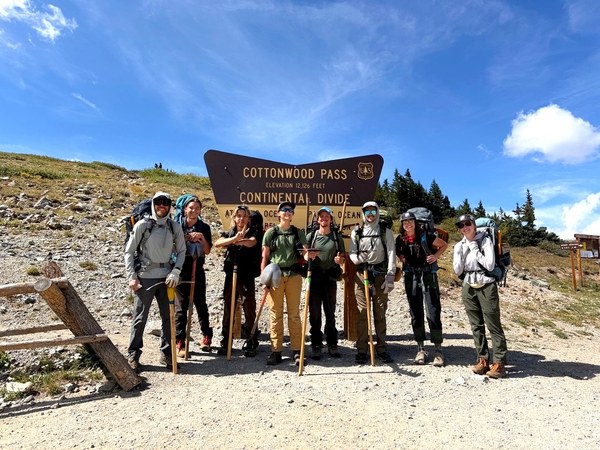
As Chief Communications Officer for Colorado Mountain Club, I spend a lot of time talking about the incredible work our Trail Crew does. I write about them, I share statistics about them in our Annual Impact Report, I listen to reports from Conservation Director Brian Bergeler about them during all-staff meetings, and, most heroically, I've posted beautiful photos of their work on social media.
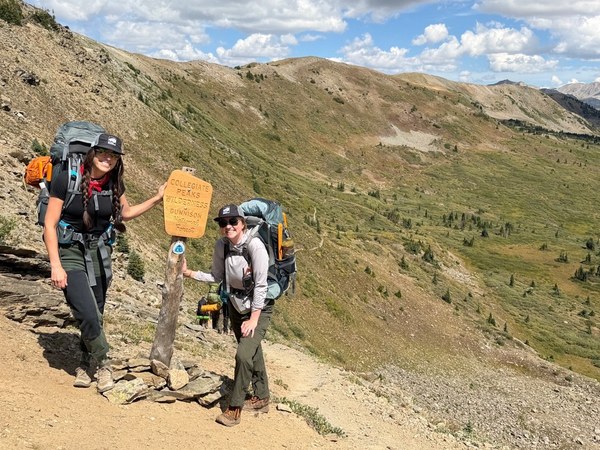 Until recently, I had never actually done it. So, when the opportunity came up to spend 24 hours on a trail crew hitch alongside my coworker Sarah Schuller from our Youth Programs team, I confidently thought, "How hard could a day of trail work be?"
Twenty-four hours later, I had my answer. Very hard. Painfully hard. "Why-does-every-muscle-in-my-body-exist?" hard. And I was only there for a day. The crew members I worked alongside spend months each summer doing this.
Months.
The Cruel Math of Trail Work
Our destination was South Texas Creek Trail #417 in the Gunnison National Forest, a beautiful section of trail that coincides with both the Colorado Trail Collegiate West route and the Continental Divide National Scenic Trail. 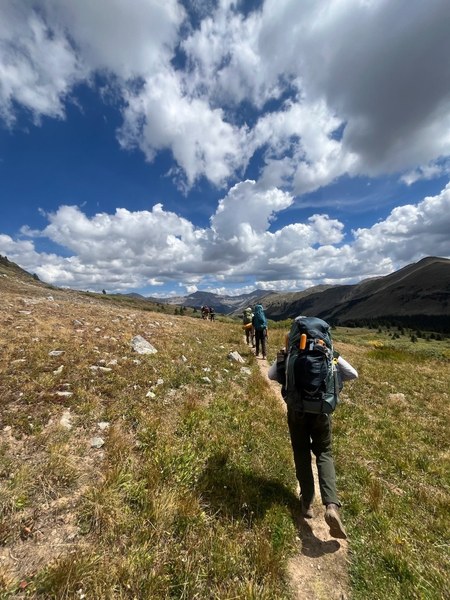 We met at the top of Cottonwood Pass and standing at 12,000 feet, looking out across the high alpine landscape, I felt pretty optimistic. Then our Conservation Coordinator, Joey Lancia, explained the plan. To get to camp, we'd hike in a little over two miles; mostly downhill, which sounded great - in theory. What I was not comprehending at the time was that every foot of elevation we lost would eventually need to be regained.
Repeatedly.
The actual trail work was lower on the trail, which meant each morning we hiked downhill to work. Then hiked uphill after a full day of work. When it was finally time to leave camp we got to climb the entire 2,067 feet back toward the trailhead. As a desk jockey, I can only describe this as the trail crew equivalent of launching a marketing campaign where the budget gets spent on day one and you still have to explain the results to your CEO six months later.
The Tools of the Trade
The first thing I learned was that trail crew members don't just hike; they hike carrying their tools.
Real tools.
Not the "I bought this for a gardening project and used it once" kind of tools - workhorse tools. 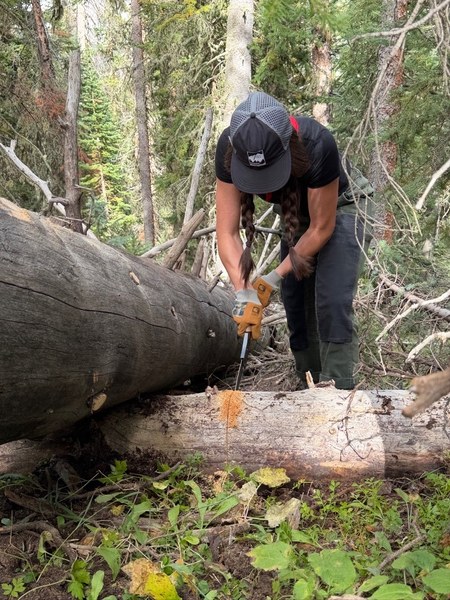 There were McLeods, pick mattocks, saws, and other implements that looked like they could either fix a trail or launch a medieval siege.
Personally, I quickly identified the one tool I was qualified to operate: the shovel.
The shovel made sense to me because everyone understands the shovel. The rest of the tools seemed designed for people who actually knew what they were doing. Which, fortunately for me, described the rest of the crew.
Camp Life
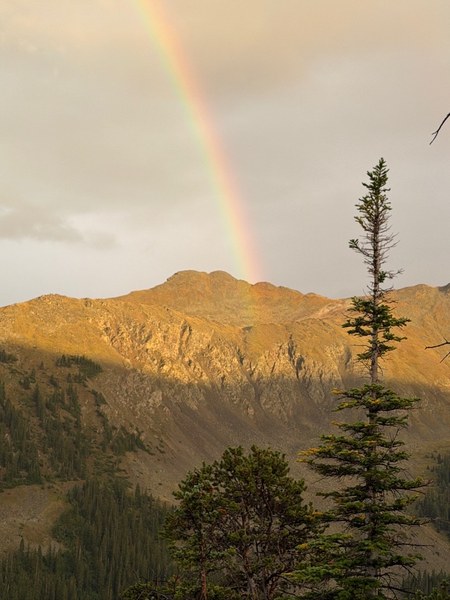 We set up camp near a lake, which meant we had a reliable source of water and a pretty spectacular office view. Quite different from the fluorescent lights back in my Golden office. That evening I also learned something important about trail crew nutrition: three full boxes of precooked Kraft Mac & Cheese are almost enough food for a trail crew member. Almost. The caloric requirements of spending ten hours hiking and building trail appear to be roughly equivalent to a small bear preparing for hibernation. It rained that evening and we were all tucked in our tents by 7:30pm and I was completely exhausted.
Drainage: The Unsung Hero of Trails
Our primary mission on this section of trail from the U.S. Forest Service was drainage work. Now, before this experience, I would have ranked trail drainage somewhere near "accounting procedures" on the list of things I find exciting. I was so wrong.
Properly built and maintained drainage is actually the secret force holding many trails together. Water is relentless, and if it isn't properly directed off the trail, it starts carrying soil away. Over time, erosion widens the trail, creates ruts, damages vegetation, and turns what was once a pleasant hiking path into a maintenance nightmare. 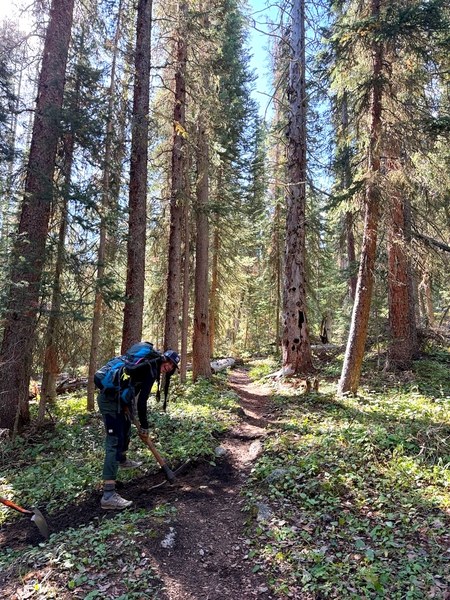 By cleaning existing drains and restoring water flow, the crew helps prevent thousands of hikers from unknowingly walking on a trail that's slowly disappearing. In just 24 hours, our crew cleaned and modified 23 drains.
Twenty-three.
My segment of the crew repaired a rock check that had been installed years ago that was missing one of its rocks - a crucial piece of any rock check, as you might imagine. The beauty of trail work is that a well-built feature can continue protecting a trail for years. A relatively small repair today can help preserve that section of trail for another decade.
Meeting the People Who Make It Happen
One of the best parts of the trip was getting to know the crew.
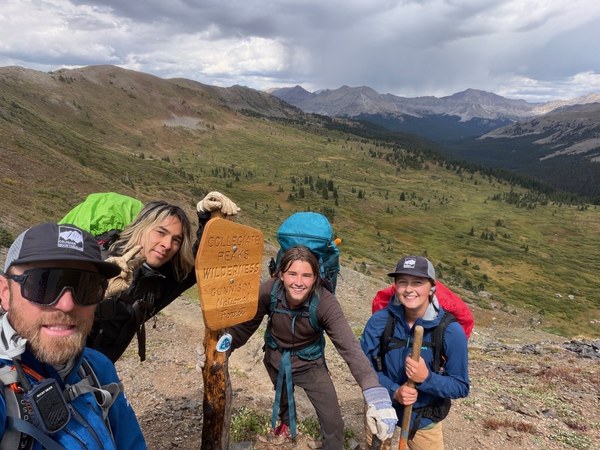 I worked alongside August, who I immediately recognized from CMC's Teen Internship Program the previous year. He had just turned 18 and joined the crew only a couple of weeks earlier. In fact, his birthday was his first day on the job. When I turned 18, I celebrated by eating pizza and hanging out with friends. August celebrated by joining a trail crew and hiking into the backcountry carrying tools.
We are not the same.
Then there was Maria, who casually mentioned that during her assignment in Medicine Bow-Routt National Forest, her crew of just three moved approximately 200 trees from blocking the trail on one 4-day hitch.
Two hundred.
I also learned from Maria and Clayton that if you're ever assigned to work near Walden, Colorado, it is wise to bring your own entertainment. Man, did they have some stories.
Stories shared on the trail, stay on the trail.
The other thing I discovered is that technical trail skills are only part of being a successful crew lead. 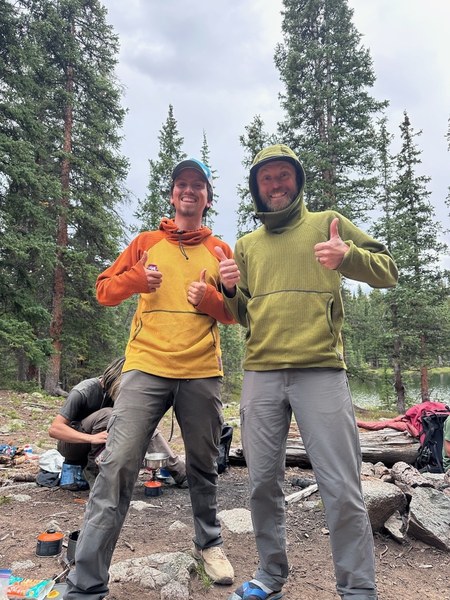 You also need an arsenal of jokes, riddles, and terrible puns. Our crew lead, Will, demonstrated this repeatedly. As it turns out, morale matters when you're spending a day digging drains, moving rocks, and hiking thousands of feet of elevation.
Anyone can maintain a trail. Maintaining a trail while keeping everyone laughing is a true skill.
Imposter Syndrome at 11,000 Feet
Throughout the trip, Sarah and I experienced a surprisingly strong sense of imposter syndrome. 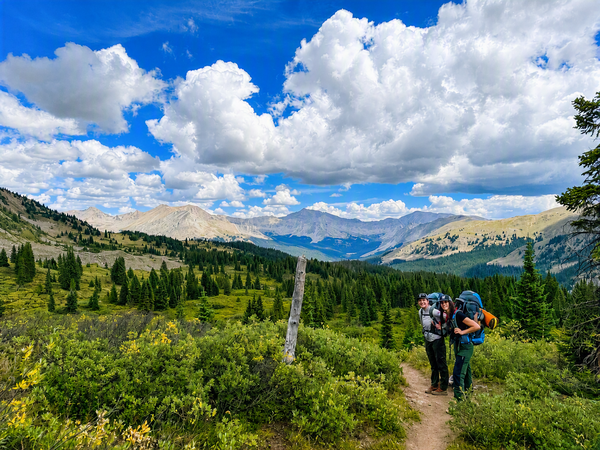 Not because the crew made us feel unwelcome; actually, it was quite the opposite. It happened because we witnessed something over and over again - hikers stopped to thank our crew.
Through-hikers. Day hikers. People taking scenic photos at the top of the pass.
Again and again, visitors paused to express their appreciation, and it became obvious that these trails matter deeply to people. Their work matters deeply to people. Standing there among individuals who dedicate entire summers to maintaining those experiences made our 24-hour contribution feel very, very small.
The Work You Don't See
That's probably the biggest lesson I took away from my brief stint as a trail crew member; most trail work is invisible. No hiker celebrates a drainage structure that's functioning exactly as intended. No one takes photos of a rock check that successfully prevents erosion. Nobody posts on social media about how smoothly water flowed off the trail after a rainstorm. 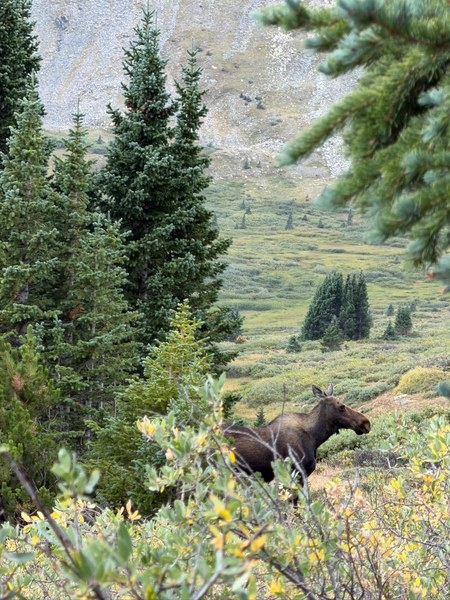 Despite the lack of outward recognition, those things are the reason trails remain sustainable year after year. They're the reason hikers can access incredible places like South Texas Creek and the reason public lands stay accessible for future generations. Truly, they're the reason partnerships between organizations like Colorado Mountain Club and the U.S. Forest Service matter so much.
One Day Was Enough
After 24 hours, Sarah and I hiked out of the wilderness and returned to our regular jobs. The crew kept working. They continued carrying tools, maintaining drains, rebuilding features, clearing trees, and doing countless small tasks that collectively keep Colorado's trail system functioning. One day was enough for me to gain a profound respect for the people who do this work. It was also enough to convince me that perhaps my future in trail construction should remain focused on shovel operations. Still, every time I step onto a well-maintained trail now, I'll notice things I never noticed before. The drains. The stone structures. The carefully managed water flow.
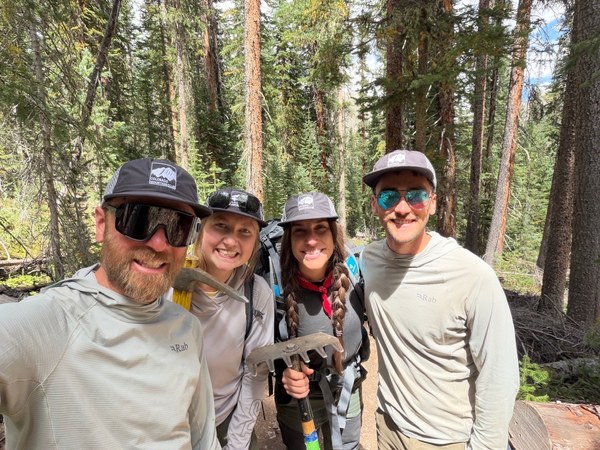 Most importantly, I'll think of the dedicated crew members whose hard work makes it all possible. Most hikers will never know their names, but every hiker benefits from what they do.
After spending just 24 hours as a trail crew member, I can confidently say:
Those thanks are well deserved.
How You Can Get Involved
While I may be returning to the relative safety of emails, meetings, and presentations, the trail crew will be back out there doing the real work. If their efforts inspire you as much as they inspired me, consider signing up for an upcoming CMC Volunteer Trail Maintenance Day:
Trail crew life not for you? That's okay, me either; consider making a donation to support the program.
Add a comment
Log in to add comments.