 Ashley Kramer
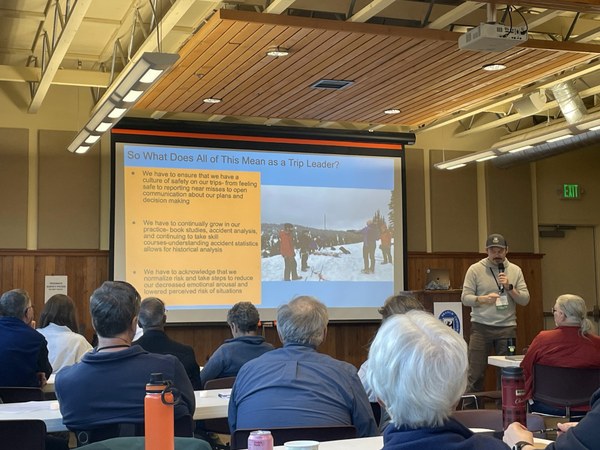
This last month, I had the privilege of attending The Mountaineers South Sound Leadership Summit in Seattle.
Three of the six presentations that day were focused on "Tactical Decisions" and Risk Management as a leader. The presenters were well prepared and engaging and the topics were highly relevant to our work as outdoor leaders. I wanted to take this opportunity to share some of my key takeaways from the presentations:
1. The importance of Trip Feedback - As said by Keith Stinebaugh, "the best leaders don’t just read the compliments. They pay attention to what might not be so positive. It can be uncomfortable, but it’s how you improve." This message came up again and again throughout the Summit. Trip feedback gives us insight into how others perceive our leadership style, our ability to manage a group, and our decision-making in the field. Encourage your participants to provide honest and raw feedback so that we can grow and improve to become a better Club overall.
2. Post Trip Reflections - Recreating in the outdoors has its inherent risks, even when we're on our backyard trail just a few miles from town. But as we venture further back into the mountains, how often are we "tricked into thinking that we made good decisions rather than we were lucky (which is more likely)" (a quote a wrote down in my notebook from the second session of the Summit). Taking time to reflect, whether with your group, your co-leader, or even on the drive home—can be invaluable:
- What did we do well?
- What could we have done better?
- What are we going to do next time?
3. Creating an environment where others are not hesitant to speak up - How many of us have been on a trip where we notice worsening weather, felt uneasy about a route, or had concerns about safety, but don't have the courage to speak up. Group dynamics are real and pressure to keep going exists. As leaders, it’s on us to create a space where participants feel comfortable voicing concerns, where they feel heard rather than brushed off. As noted by Tom Volg, The Mountaineers CEO, "we're rarely rewarded for the conservative decisions we make. Society so often judges safety by the outcome rather than the process or the journey we took to make a sound decision."
4. The importance of reporting Near Misses -Near misses are one of our best tools for preventing future accidents. Reporting them allows all of us to learn, often without the cost of serious injury or harm. In the presentation by SAR volunteer Dr. Dennis Eller, he walked through the accident cause analysis that SAR teams take after each rescue. While SAR incidents often involve higher risk than the trips most of us lead, the same cycle applies to our trip planning: assess risks before the trip, monitor risk during, and reflect on the risk afterward.
Another notable quotes from his presentation about Risk Assessment Factors During Operations from a Mountain Rescue Specialist Perspective:
- "Mountain environments are unpredictable, so risk assessment is an ongoing process. Effective communication with the team is essential to share updates about the situation, hazards, and changing conditions. Rescuers need to keep a constant dialogue to ensure that everyone is aware of potential risks and the plan of action"
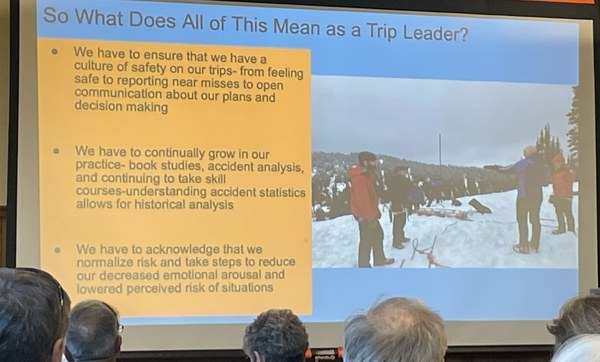
5. The value of trip reports - Taking the time to add trip reports helps keep us all up to date on trail conditions, group dynamics, and areas to improve. They also serve as a record over time, helping future leaders anticipate challenges, better plan logistics, and make more informed decisions before even stepping onto the trail. Done consistently, trip reports become less of a task and more of a shared knowledge base that strengthens the entire community.
- Take away idea - have a participant write the Trip Report! It’s a simple way to increase engagement and get a fresh perspective.
6. Learning from others - The majority of the risk management presentations involved an in-depth analysis of professional incident reports. Dr. Dennis Eller suggested adding book studies to our practice. We all love a nail-biting adventure story of courageous mountaineers pushing the limit. What if we took this reading into a learning opportunity, got together with our CMC peers and discussed the environmental risk factors, the human factors, or the equipment and gear factors that led to their story?
- There so happens to be a NEW CMC State-wide Book Club, put on by CMC member Hannah Korrell. Join the first meeting on May 5th from 6-9pm!
Attending the Summit left me refreshed and excited for our Leadership Summit in October! RSVP TODAY! We hope you'll save the date and join us for a day of learning and fun! If you are interested in presenting on a topic at this year's Summit, contact ashley@cmc.org.
If you're in Seattle, make sure to join a Mountaineers trip!
Add a comment
Log in to add comments.Thanks, Ashley! This is good info! Glad to see more collaboration with The Mountaineers.