 Ashley Kramer
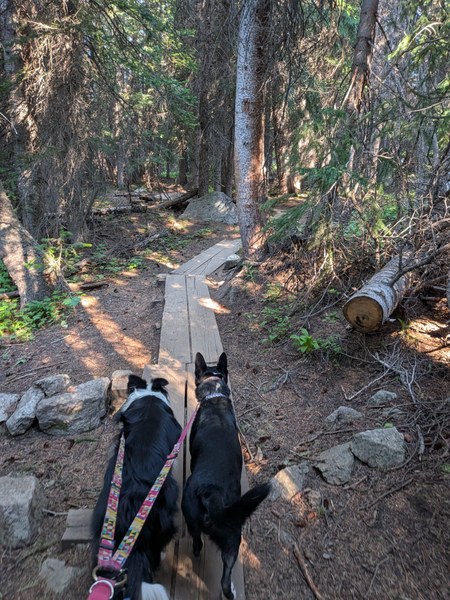
Hiking with your special 4-legged companion can be a joyful experience for both of you. But do you know what aspects of hiking with other dogs should be considered when leading a doggie hike?
Here are a few unofficial tips from a dog lover and occasional doggie hike leader who has consulted with more experienced doggie hike leaders and Carnie, her canine hiking companion.
CMC DOGGIE HIKE POLICY
CMC’s policy is that your trip, as described in the Activity Schedule, indicate Doggie Hike in the title. All doggie hikes must comply with the local leash restrictions or command restrictions at any county, state or federal park and on USFS and BLM lands. An additional policy required by Denver is that your trip description indicates when dog will be off leash, whether at the meeting location, the trail head or during the hike.
PICK UP AFTER YOUR PET
Just as Leave No Trace applies to us as hikers; it applies to your dog. Bury your pet’s solid waste or pack it out.
SIZE MATTERS
Consider the size of your dog and whether you want to restrict the hike to dogs of a similar size/weight range or if you are willing to have dogs of all sizes mixed together.
Consider how many dogs you wish to have on your trip and whether you are willing to have one participant with more than one dog.
FITNESS
Is this trip going to be a 14er involving talus, scree and bouldering? Or is it all on trial? It might not make a difference to your boot soles, but it certainly does make a difference to a dog’s paw pads. Your trip description should indicate the type of terrain. Just as leaders screen participants, they have not hiked with previously you should consider screening the dogs on your hike. Consider asking your participants a few questions about whether their dog has hiked previously, at what altitudes, the type of terrain and how the dog fared during the hike. How does the dog respond to lightning and thunder?
WINTER TRAILS
If leading a doggie hike in the winter how will the dogs deal with the snow/ice conditions? Will you suggest the participants have dog boots or use some type of snow repellent on the dog such as Musher’s Secret or Vaseline?
SOCIALIZATION
Are the dogs on this hike party animals that love people and other dogs? Or, does Fido’s tail wag only for people and not for other pooches? Some dogs are dog aggressive; your hike should not be a training ground for the dog’s caretaker and the dog with an aggressive personality.
AGE & CONDITIONING
Cute puppies – and what puppies aren’t cute – are magnets for meeting others. But excessive mileage for puppies before their skeletons are fully formed can be harmful.
Likewise, lengthy mileage for older dogs may wear them out and cause pain. Consider limiting the dogs on your hike to be in excess of 1 year and no older than 8-10 years. Of course, age, physical fitness, breed and experience should be taken into consideration when allowing dogs on your hikes.
MEET & GREET
As CMCers we frequently introduce ourselves to others we have not met previously. Our dogs do the same when they meet strangers. Consider having a meeting location where it is safe for dogs to be in the open to sniff & greet each other. If there is a safety zone this could be an area where dogs are allowed off leash to greet each other.
CARPOOLING
How are the dogs transported? In a car seat, in the back seat, in a crate? Are you willing to have dogs ride together who have never met each other previously except at the carpool location? On a doggie hike non-dog companion participants may not wish to ride with others who have dogs. Be certain to ask if there is a preference.
MEDICAL CONDITIONS
Although you as a responsible caretaker are certain to have your dog’s vaccinations up to date, not everyone does the same. Consider stipulating in your trip description that participants should have canine vaccinations up to date. Always carry a copy of your dog’s vaccination record in your glove compartment and transfer to your pack when hiking.
CANINE FIRST AID KITS
Although you as a leader carry a first aid kit for your own use and presumably your hike participants carry their own as well, do you have the materials you need for a canine first aid kit? Do you have non-stick tape that can be used on a dog’s coat? Toenail clippers? Check with your vet for suggestions of what to carry to bandage your pet.
WATER
Carry a special water bottle for your dog (or have him/her carry their own gear) and depending on conditions, carry extra water if stream conditions are not known. If participants are not familiar with the area, your trip description should indicate whether to bring extra water.
FOOD
Snacks and lunch for Fido is just as important as snacks and lunch for you. You both need extra energy for the trail. As hikers, we frequently share treats amongst ourselves, but do you want others to share doggie treats with Fido? Consider announcing if you prefer others not to feed your pet.
TRAILS FRIENDLY TO DOGS – WHERE TO GO
Ania Savage, author of Best Hikes with Dogs Colorado, published by the Mountaineers recommends trails friendly to dogs by area: Fort Collins, Nederland/Eldora, Boulder/Lyons, Denver Plains, Denver Foothills, Colorado Springs, Highway Corridors for I-70, I-40, 285, Steamboat, Summit County, Vail, Leadville, Aspen, San Juan Mountains, Grand Junction, 14ers.
NOTE: Carnie and Tuxedo had quite a bit of input to these tips & they were adamant about snacks, lunch & water although neither is fond of the tip about the dog booties, they did endorse Musher’s Secret for winter wear.
Add a comment
Log in to add comments.