 Keith Stinebaugh
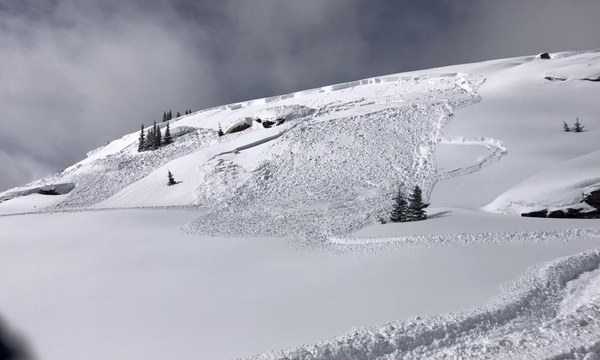
It's a beautiful winter day in the backcountry and your group is enjoying a snowshoe outing. One section of the route passes below an avalanche slope and unfortunately it slides, burying one of your group. However, everyone in your group has completed Companion Rescue Training and is carrying transceiver/probe/shovel, so you quickly locate the victim and dig her/him out. A happy ending to the story?
Not quite yet, because digging someone out is only part of the process.
Most of our avalanche training stops at the point where we start digging to rescue the victim. However, once we have uncovered the victim we now have to perform first aid in what can be a difficult environment. A continuing education session to address this topic for folks who have completed an Avy 1 course was presented by Avalanche Savvy on 03 Dec 2025 at Morris and Mae in Golden. A detailed discussion about treatment after an avalanche victim has been extracted is beyond the scope of this article, so here are a few important considerations from the notes taken during the session followed by some references for detailed information.
The first consideration is the A of the ABCs of first aid - Airway. It is critical to uncover the victim's face and chest as quickly as possible, even if that means not digging them fully out at first. Once the face and chest are uncovered, check to see if the Airway is clear. If not, clear it using the methods you learned in your first aid course. Then check for Breathing. If the victim is not breathing, perform five rescue breaths, each of one-two seconds and about six seconds apart, this often re-starts the victim's system. Ideally you will use the face mask you carry in your first aid kit as part of rescue breathing. Then on to Circulation. When checking for pulse, it's best to check the carotid artery, because if the body has already started shutting down due to hypothermia or trauma a radial pulse might not be detectable. If no pulse is detected and you have to perform CPR before fully digging the victim out, try to place a hard object (snowboard, snowshoe, etc) under them so that you are not doing CPR on a softer surface. Also, it is important allow the chest to fully recoil after each compression so that blood is allowed back in.
Once the victim is breathing and you know they have a pulse, complete digging them out and perform a full patient assessment.
One critical part of treating a victim after they have been extracted from the snow is to prevent hypothermia. Even though the snow was cold, it was also acting as an insulator to keep the victim from getting colder. Once the victim is out in the open air they need to be placed on an insulating pad (which should be something every team carries at least one of into the backcountry in winter) and covered up. Hypothermia is an even greater threat if the victim has suffered multiple traumas, because the body is fighting to deal with trauma as well as the cold. Even when on an insulating pad and covered up the victim may take a long time to warm up.
Another important part of this process is self-care for the rescuers. Once the victim has been extracted make sure the group stays warm, hydrated, and fed. Avoid sending anyone out onto the flanks of an avalanche, as there may be snow that is on the same aspect and slope but has not yet slid.
There are several excellent resources available dealing with what to do after an
avalanche. For those of you who have access to back issues of "Accidents in North
American Climbing" check out Know the Ropes/Mountain Medicine from the 2024 edition. The second part of Know the Ropes is "Avalanche First Aid" on pp12-17, written by two of the founding contributors of After the Avalanche. Their website (aftertheavalanche.org) has a wealth of information. BCA also has an excellent series of videos (https://backcountryaccess.com/en-us/blog/avalanche-rescue) dealing with avalanche issues, two that were used in the continuing education session were Post-Avalanche Patient Care (https://backcountryaccess.com/en-us/blog/p/avalanche-rescue-post-avalanche-patient-care-video) and
Avalanche Rescue: Backcountry Evacuation - (https://backcountryaccess.com/en
us/blog/p/avalanche-rescue-backcountry-evacuation-video).
Add a comment
Log in to add comments.